Table of Contents
- What Is HACCP?
- Which Businesses Need HACCP?
- Key Requirements
- Application Procedure
- On-Site Audit
- Post-Certification Obligations
- FAQ
1. What Is HACCP?
HACCP (Hazard Analysis and Critical Control Points) is a science-based food safety management system. In Korea, HACCP certification is administered by the Korea Agency of HACCP Accreditation and Services (KHAS) under the Food Safety Act.
2. Which Businesses Need HACCP?
HACCP is mandatory for meat processors, dairy producers, egg product manufacturers, and certain fishery product businesses. It is recommended for all food manufacturers seeking to supply major distributors or export markets.
3. Key Requirements
- Documented HACCP plan including hazard analysis
- Critical Control Points (CCPs) identified and monitored
- Corrective action procedures
- Prerequisite programs (sanitation, pest control, etc.)
- Employee HACCP training records
4. Application Procedure
- Submit application to KHAS
- Document review (plan assessment)
- On-site audit by KHAS inspector
- Certification issued (if audit passes)
5. On-Site Audit
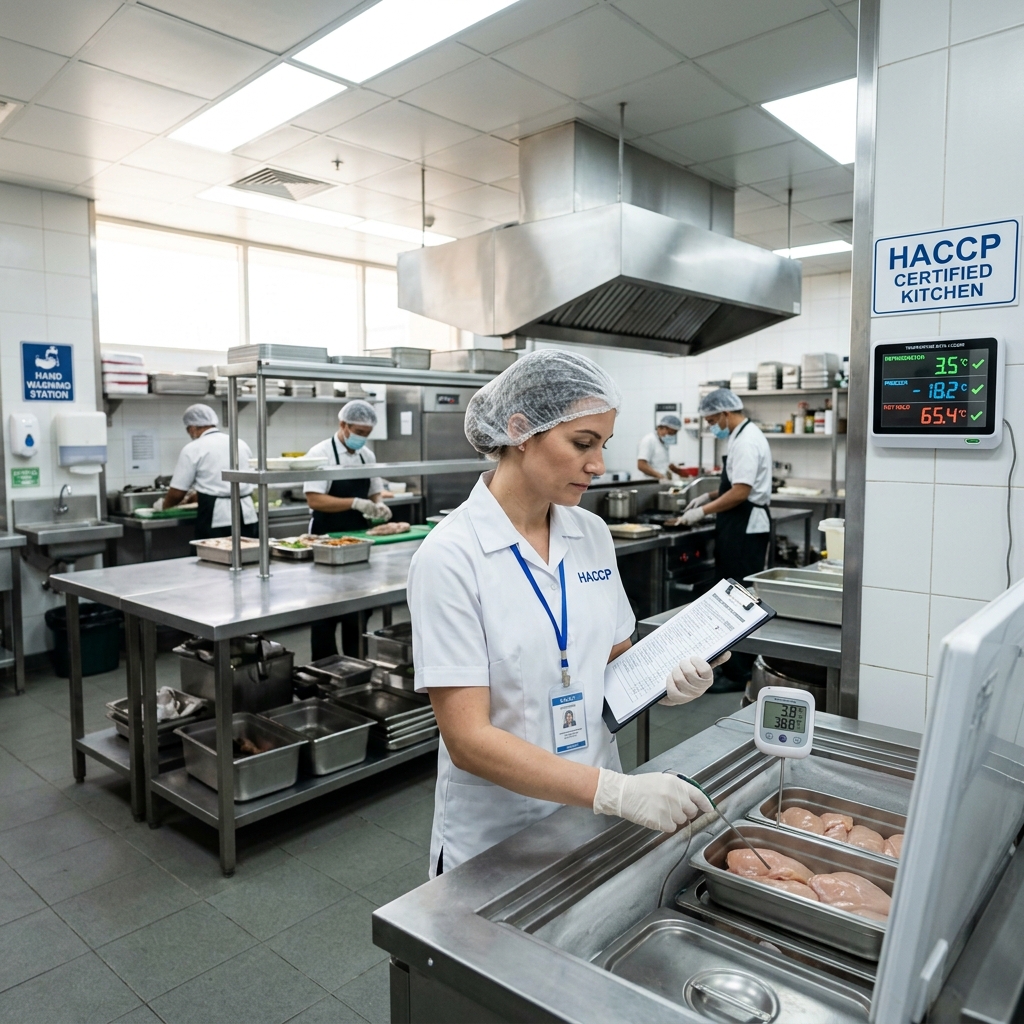
KHAS auditors verify that your facility and operations match the submitted HACCP plan. Common deficiencies include inadequate temperature logs, missing CCP monitoring records, and unsanitary receiving areas.
6. Post-Certification Obligations
- Annual surveillance audit
- Triennial full re-certification audit
- Maintain all monitoring and corrective action records
- Report significant process changes to KHAS
FAQ
Q. How long does HACCP certification take?
A. Typically 3–6 months from application to certificate, depending on facility readiness.
Q. Can foreign-invested food companies apply?
A. Yes, any food business legally operating in Korea may apply.
Get Expert Help with HACCP Certification
Vision Administrative Office works with food safety consultants to guide your HACCP application from plan development to audit. Free initial consultation.
Request Free Consultation →